Longines
A factory on 'the long meadows' near Saint-Imier, which had its name and its winged hourglass registered as early as the nineteenth century — against the counterfeiters.
Service and repair of your Longines
Longines watches that have come in here include the Ultra-Chron, with the automatic calibre 431 from the 1960s — one of the first high-beat movements, with a balance that oscillates faster than in an ordinary movement.
In a service the movement is completely disassembled, cleaned, lubricated and regulated. A chronograph, such as the classic Longines with calibre 13ZN or 30CH, has more parts and so takes more work.
If a part for an old movement is no longer available, it is made or made to fit in the workshop; more on that on the Restoration page. You first get a quote by email, and nothing is done that you haven't agreed to.
History
Longines started in 1832 in Saint-Imier, founded by the watchmaker Auguste Agassiz with two partners, under the name Raiguel Jeune & Cie. By 1846 Agassiz was on his own. He brought his nephew Ernest Francillon, an economist, into the business, and Francillon made a shrewd choice early on: only pocket watches wound by a crown, no key.
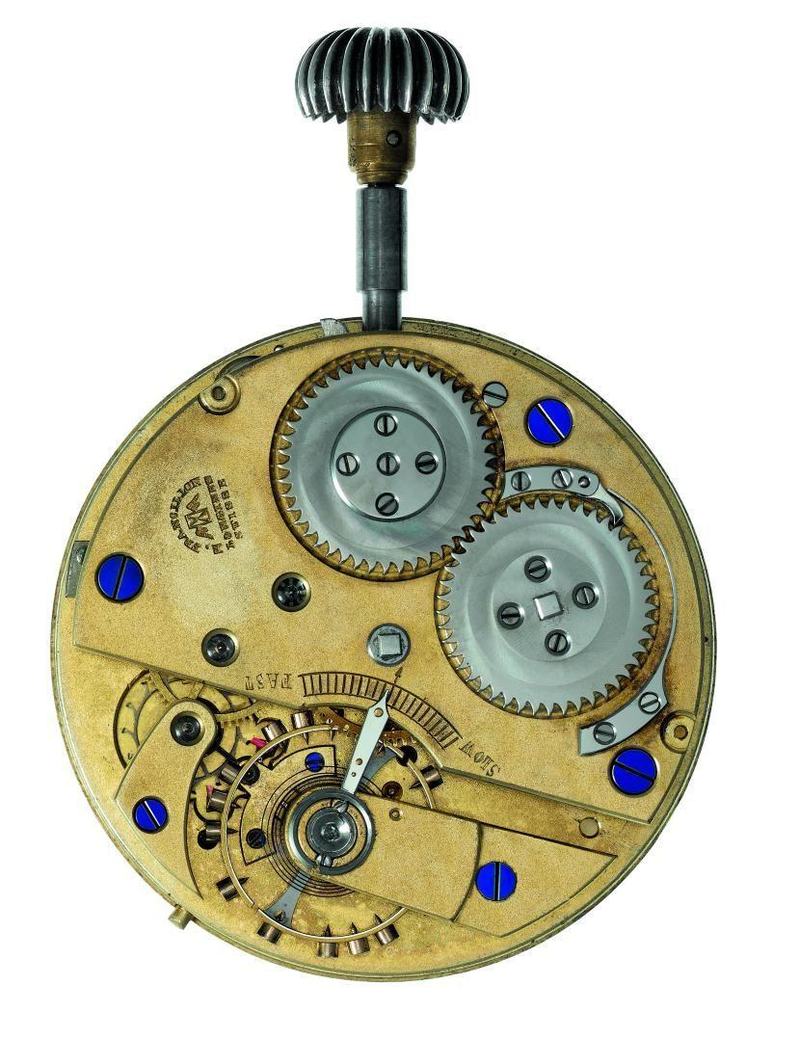
Under Francillon the company moved from the établissage system to modern production. In 1867 he built a factory on a plot of land called Les Longines, 'the long meadows', and that is where the name came from. The same year saw the first in-house movement, the 20A, which won a prize at the World's Fair in Paris. Technical director Jacques David went to the World's Fair in Philadelphia in 1876 and wrote a 108-page report on how the American factories worked; it is regarded as one of the most important documents in the history of watchmaking.
The first chronograph followed in 1878, the 20H, with a single button to start, stop and reset. With it Longines began to make its name in equestrian sport. The watches became so sought after that they were copied, and Francillon had the name registered in 1880 and the winged-hourglass logo in 1889.
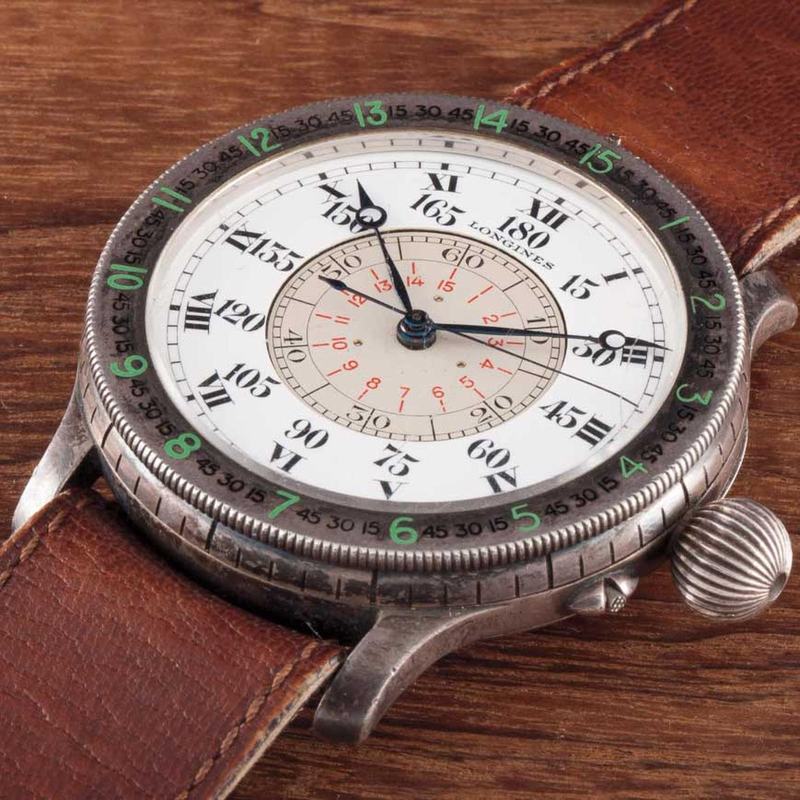
In the twentieth century Longines made watches for the air and the sea: in 1925 the Zulu Time with two time zones for the Canadian navy, in 1927 a navigation watch for aviators with P.V.H. Weems, in 1931 the Hour Angle watch with Charles Lindbergh, and in 1934 the first chronograph with a flyback function. In 1969 Longines developed its first quartz movement.
In 1983 its owner ASUAG merged with SSIH, Omega's group; in 1988 that became the Swatch Group. Longines found its place there below Omega, with watches that put the emphasis on elegance and classic shapes.