Rolex
A Rolex is the luxury watch built like a tank. Two historic innovations still define the brand: a hermetically sealed case and a rotor that turns with gravity. Both of them Rolex's own.
Service and repair of your Rolex
Vintage Rolex comes in regularly, and not just the well-known automatics. The watches that have been on the bench here include a Datejust, ladies' models and antique hand-wound watches, with movements such as calibres 1530, 2030 and 3035.
Usually it's a service. The movement is completely disassembled, cleaned, lubricated and regulated, and the case gets new gaskets.
Everything is done in the workshop in Weesp; nothing goes to a service centre. First the watch is opened and you get a quote by email, and nothing is done that you haven't agreed to. A service comes with a two-year guarantee.
History
Contrary to what you might expect, Rolex started in London, not in Switzerland. In 1905 Hans Wilsdorf and his brother-in-law Alfred Davis founded the firm Wilsdorf and Davis. They imported Swiss movements and had cases made for them in England; the watches went to jewellers, who put their own name on them.
The name Rolex only came in 1908, and Wilsdorf chose it with care: short enough to fit on a dial and easy to pronounce in any language. He also felt it sounded like a watch being wound. In 1919 he moved the company to Geneva, mainly because of British taxes on luxury imports and the duties on gold and silver.
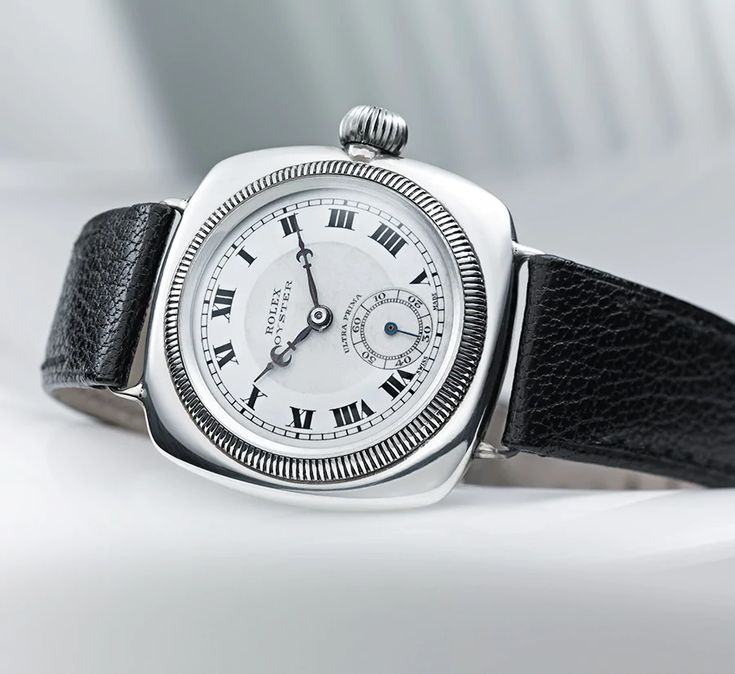
With the introduction of the Oyster in 1926 he solved a problem every watch had at the time: dust and moisture creeping in under the dial and past the crown. The Oyster, with its hermetically sealed case, became famous above all when the British swimmer Mercedes Gleitze swam the Channel in 1927 with an Oyster around her neck.
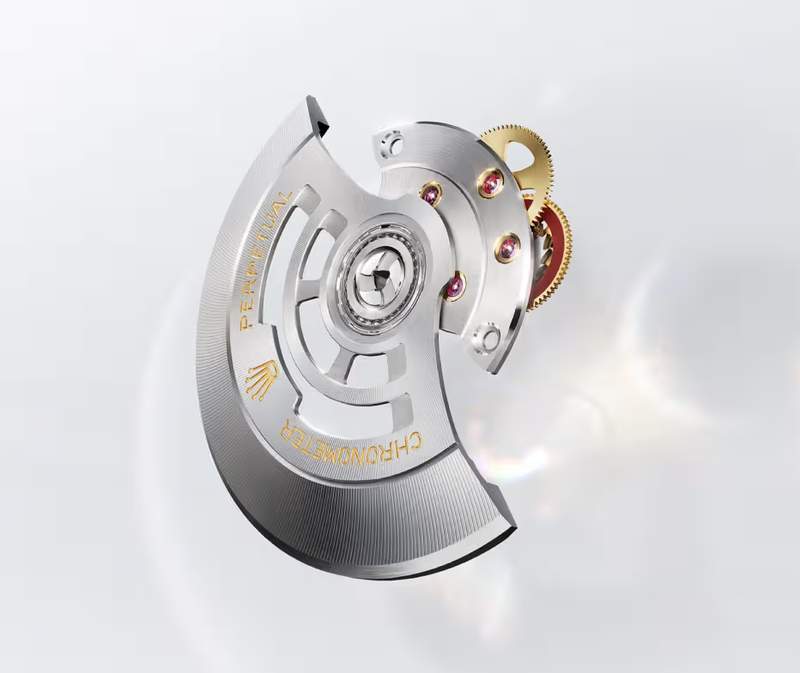
The second innovation followed in 1931: the Perpetual rotor, a semicircular weight that turns freely with gravity. It was what made the automatic watch truly practical, and it turned the Oyster into the Oyster Perpetual.
During the Second World War Wilsdorf sent watches to Allied prisoners of war; through the Red Cross more than three thousand British officers received one, to be paid for after the war. When Rolex asked for payment in 1947, four hundred had paid.
After his wife's death Wilsdorf placed all his shares in a foundation, and since his death in 1960 it is that foundation which owns and runs Rolex. More than a million Rolex watches are made every year.